
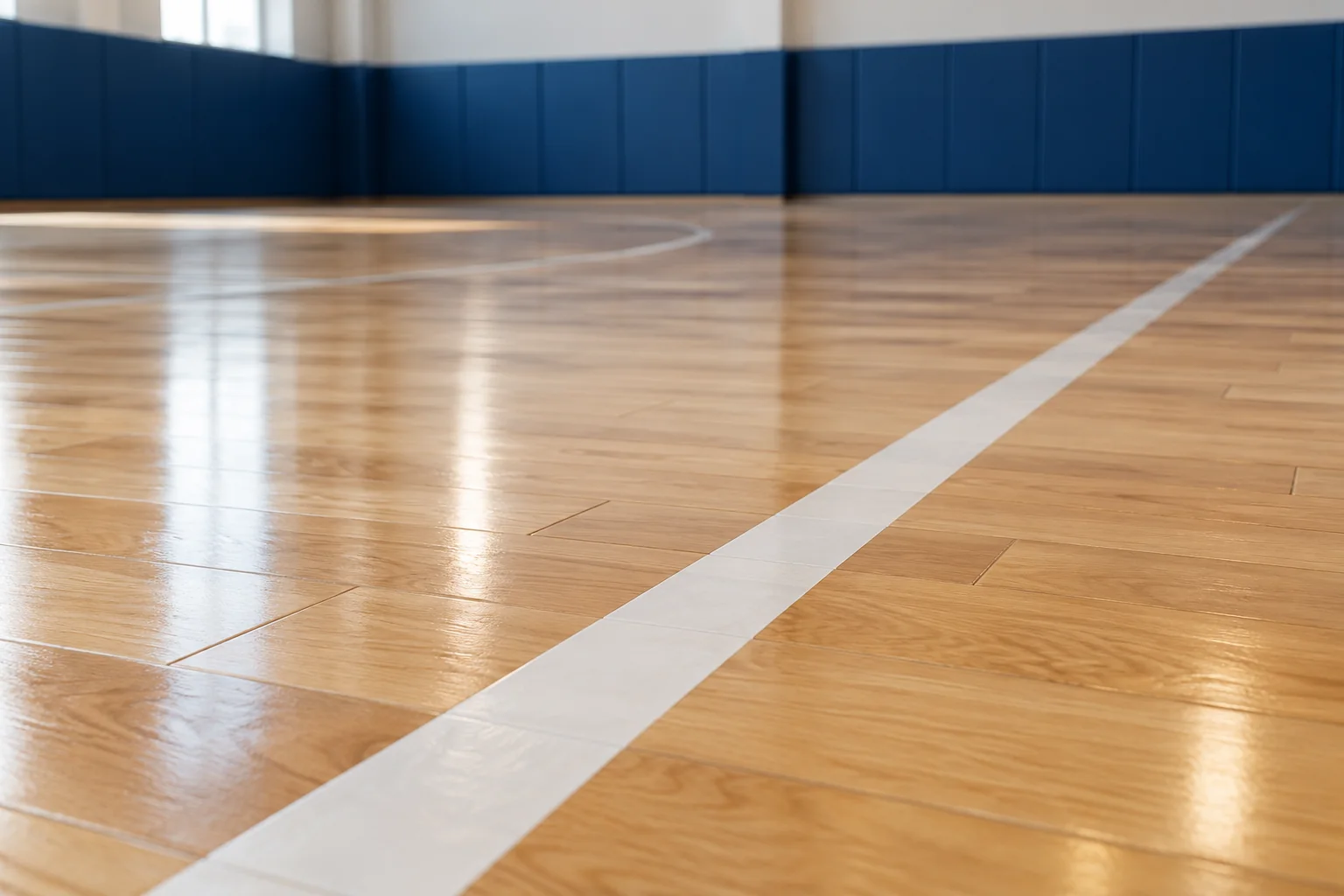
First establish the facility's construction and intended use
A separating seam, local settlement and a slippery area require different explanations. Before selecting measurements, establish what is installed: a rolled material, poured system, tiles or artificial turf. The underlying layers, base, joining method and drainage matter. The visible top layer may reflect a base defect, so examining the surface alone sometimes leaves the cause of a change unresolved.
The asset's purpose also sets the comparison boundaries. A running track, multipurpose court and indoor games hall are used differently. The type of loading, permitted footwear, indoor or outdoor location, surface age and manufacturer's information are clarified. A numerical measure selected for another sports asset cannot be applied merely because the materials have a similar colour or a common trade name.
Relate the defect to an exact location and conditions
A damage map uses stable reference points: lanes, markings, joints, entrances and drains. Each area records the nature, dimensions and extent of the change and adjacent features. General views and details are shown separately. This allows later checking of where a measurement was taken, whether it coincides with the disputed event's location and whether a photograph concerns another part of the facility.
For outdoor surfaces, precipitation, surface temperature, water, contamination and shade matter. Indoors, cleaning traces, humidity and applied maintenance products may be relevant. Condition after drying or cleaning does not necessarily reproduce training conditions. The researcher separates directly recorded circumstances from participants' accounts, stating each observation's date and the time it concerns.
Select tests for the property being checked
Visual inspection identifies open seams and visible damage but does not replace determination of mechanical properties. Depending on the task, evenness, thickness, interlayer adhesion, slip resistance, deformation and shock absorption may be examined. These are different characteristics: a successful result in one test does not automatically establish the others. The method is selected after establishing the construction, intended facility use and comparison criterion.
Checks are distributed between the disputed area and appropriately justified comparison areas. The record needs point coordinates, conditions, instrument, method and results. A laboratory sample of the top layer does not always describe the entire installed system. If sampling is needed, its location, quantity, labelling and layer recording are agreed beforehand. Unauthorised cutting of material may break the examination's connection to the original construction.
Installation and maintenance history help check the origin of changes
The contract and specification show the agreed construction, as-built materials record work performed, and acceptance and earlier test documents show condition on a particular date. These are compared, checking the address, area, system brand and completeness of appendices. A material certificate alone does not describe installation quality at a particular facility or the base's subsequent condition.
Operating logs, cleaning information, seam repairs and restoration of individual areas help build a chronology. Several explanations are checked: installation characteristics, base changes, wear or an external influence. The selected explanation must agree with the location and nature of the defects. If the surface has already been replaced, retained samples are useful only with reliable information about their sampling location and original position.
A technical property and the cause of a fall are different questions
An identified level difference or changed traction is assessed in relation to the contact location and direction of movement. Analysis of a particular episode may require video, footwear information, equipment positions and the actual exercise. A defect does not automatically establish the mechanism of a fall. Equally, the absence of a large visible tear does not rule out a property change detectable only by an appropriate measurement.
The examination result must distinguish surface condition at inspection, supported information about past condition and gaps that cannot be resolved. It may describe a local defect without assessing the entire facility. Technical analysis cannot determine a diagnosis or the severity of harm to health, or guarantee the safety of future training. Medical questions and resolution of a sporting dispute belong to separate procedures and areas of competence.